
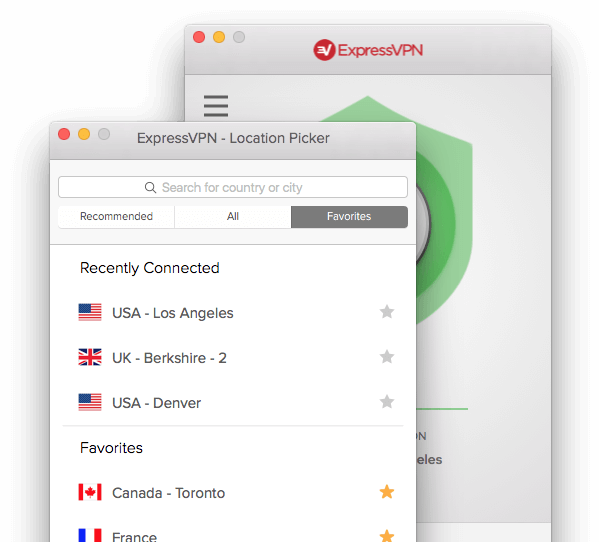
Apr 13, 2021 On your device, go to the App Store. Tap the profile icon located at the top right corner. At the top of the screen, tap your profile icon or your Apple ID. (If prompted, enter your Apple ID Password and tap Sign In.). UK-based ExpressVPN said in a statement on Saturday that it is 'disappointed' in Apple's approach to following 'the most drastic measure the Chinese government has taken to block the use of VPNs to date'. According to Apple, VPN apps will still be available in other countries and regions the providers selected. The official OpenVPN Connect app for Android and iOS does not work with the ExpressVPN OpenVPN configuration files. The reason for this is because ExpressVPN uses the fragment directive in their configuration, which is not supported by the OpenVPN Connect apps. However, there is another app for Android that does support the fragment directive. Download and install the ExpressVPN app for Mac. Connect to any of our 160 server locations. Use the internet the way you want to use it! If you need help, the ExpressVPN Support Team is available via live chat and email.
Monday, 31 July 2017
From the company blog of ExpressVPN, a major VPN provider serving users in China:
We received notification from Apple today, July 29, 2017, atroughly 04:00 GMT, that the ExpressVPN iOS app was removed fromthe China App Store. Our preliminary research indicates that allmajor VPN apps for iOS have been removed.
Users in China accessing a different territory’s App Store (i.e.they have indicated their billing address to be outside of China)are not impacted; they can download the iOS app and continue toreceive updates as before. […]
Users in China can continue to stay connected to the open internetwith ExpressVPN’s apps for Windows, Mac, Android, and otherplatforms.
From Paul Mozur’s report for The New York Times:
Sunday Yokubaitis, president of Golden Frog, a company that makesprivacy and security software including VyprVPN, said itssoftware, too, had been taken down from the app store.
“We gladly filed an amicus brief in support of Apple in theirbackdoor encryption battle with the F.B.I.,” he said, “so we areextremely disappointed that Apple has bowed to pressure from Chinato remove VPN apps without citing any Chinese law or regulationthat makes VPN illegal.”
He added, “We view access to internet in China as a human rightsissue, and I would expect Apple to value human rights overprofits.”
That’s a popular sentiment — that Apple should have stood up to China’s demands and accepted the consequences, even if it meant losing sales in China. But it’s disingenuous to pretend that this situation is not fraught with complications.
It’s also disingenuous to claim Apple has “bowed to pressure from Chinato remove VPN apps without citing any Chinese law or regulation that makes VPN illegal”. The very next paragraph in the Times story says:
In a statement, Apple noted that the Chinese government announcedthis year that all developers offering VPNs needed to obtain agovernment license. “We have been required to remove some VPN appsin China that do not meet the new regulations,” the company said.“These apps remain available in all other markets where they dobusiness.”
Expressvpn App Store Mac Os
Here’s a story from The South China Morning Post in January about this crackdown:
Beijing has launched a 14-month nationwide campaign againstunauthorised internet connections, including virtual privatenetwork (VPN) services, which allow users to bypass the country’sinfamous “Great Firewall”.
A notice released by the Ministry of Industry and InformationTechnology on Sunday said that all special cable and VPN serviceson the mainland needed to obtain prior government approval — amove making most VPN service providers illegal.
Here’s a story from earlier this month about the Waldorf Astoria in Beijing being forced to remove the VPN service that had previously been provided for guests. New York Times reporter Paul Mozur (who lives in Beijing) posted to Twitter today that Amazon is sending cease and desist letters to AWS customers using VPNs in China. Apple is not alone.
Too many people reacting to this story think that it’s about Apple deciding to acquiesce to this particular demand regarding VPN apps. It’s not. The real issues are two-fold:
- Should Apple be doing business in China at all?
- Should the App Store remain the only way to install apps on iOS devices?
Neither of these are simple topics, and I would (and am about to) argue that neither question has a clear-cut “this is the right thing to do” answer.
First, let’s dispose of the notion that Apple could have chosen to defy the Chinese government and keep the VPN apps in the App Store. Technically, Apple could have done that. But if they had, there would have been consequences. My guess is that the Chinese government would move to block all access to the App Store in China, or even block access to all Apple servers, period. This would effectively render all iOS devices mostly useless. iPhones have been sagging in popularity in China for a few years now — with no access to apps, their popularity would drop to zero. And Apple would have a lot of angry iPhone-owning users in China on its hands.
If Apple tugged on the “We refuse to remove these VPN apps from the App Store” thread, it would inextricably lead to their leaving the entire Chinese market. It’s easy to say “Apple shouldn’t have removed these apps.” It’s not so easy to say “Apple should pull out of China.” This is of course further complicated, politically, by the fact that the vast majority of Apple’s supply chain is in China.
You can say it though. Yes, China is Apple’s second-biggest market in the world, accounting for almost $11 billion in revenue in the quarter that ended three months ago. But Apple could take a stand and draw the line in the sand here.
If you really think VPN apps in the App Store is the hill Apple should die on in China, I get it. But I do not agree.
As I see it, there are only two scenarios:
- A China where people can buy and use iPhones, but can’t get VPN apps from the App Store.
- A China where people can’t buy or use iPhones.
The first scenario is obviously better for Apple financially. But I would argue that the first scenario is also better for the people of China.
The thing I keep thinking about is that iMessage and FaceTime are among the few protocols available inside China with end-to-end encryption. The Chinese just started blocking WhatsApp a few weeks ago. I don’t know why they allow iMessage and FaceTime to continue working, but they do, and both of those protocols are designed from the ground up to only work using end-to-end encryption. There is no “off switch” for iMessage encryption that Apple can flip inside China. If you’re using iMessage, it’s encrypted. It would surprise no one if China started blocking iMessage and FaceTime, but for now, their availability is a real benefit to the people of China that seems to go largely unrecognized.
To me, the more interesting question isn’t whether Apple should be selling its products in China, but rather whether Apple should continue to make the App Store the only way to install apps on iOS devices. A full-on “install whatever you want” policy isn’t going to happen, but something like Gatekeeper on MacOS could.
Keep iOS App Store-only by default. Add a preference in Settings to allow apps to be downloaded from “identified developers” (those with an Apple developer certificate) in addition to the App Store. In that scenario, the App Store is no longer a single choke point for all native apps on the device.
The App Store was envisioned as a means for Apple to maintain strict control over the software running on iOS devices. But in a totalitarian state like China (or perhaps Russia, next), it becomes a source of control for the totalitarian regime.
I don’t expect Apple to do this. They’d rather deal with the negative consequences of the App Store as a choke point than give up the benefits (including the profits) of maintaining complete control over all software on the platform.1 But if you’re angry about Apple’s role in this VPN crackdown in China, I suggest you direct your anger at the App Store as the single source for third-party software.
It’s worth noting that it’s not quite true that all software on iOS must come from the App Store. Anyone with a developer account can compile and install apps on their iOS devices from Xcode. There are a number of open source apps for iOS that are distributed this way. Open source VPN clients could be a workaround — albeit one with a high technical expertise barrier — for this VPN situation in China. ↩︎
| Previous: | Unordered Lists in Markdown |
| Next: | Conjecture Regarding the Precise Details of the iPhone D22 Display Resolution |
Getting Started
To test beta versions of apps and App Clips using TestFlight, you’ll need to accept an email or public link invitation from the developer and have a device that you can use to test.
Members of the developer’s team can be given access to all builds of the app.
All other invited testers can access builds that the developer makes available to them. A developer can invite you to test with an email or a public link.
Required platforms
- iOS apps: iPhone, iPad, or iPod touch running iOS 8 or later. App Clips require iOS 14 or later. iMessage apps and sticker packs require iOS 10 or later.
- tvOS apps: Apple TV running tvOS 9 or later.
- watchOS apps: Apple Watch running watchOS 2 or later.
TestFlight is not available for Mac apps.
Available Languages
TestFlight for both iOS and tvOS is available in Arabic, Catalan, Chinese (simplified), Chinese (traditional), Croatian, Czech, Danish, Dutch, English (Australia), English (U.K.), English (U.S.), Finnish, French, French (Canada), German, Greek, Hebrew, Hindi, Hungarian, Indonesian, Italian, Japanese, Korean, Malaysian, Norwegian, Polish, Portuguese (Brazil), Portuguese (Portugal), Romanian, Russian, Slovak, Spanish, Spanish (Latin America), Swedish, Thai, Turkish, Ukrainian, and Vietnamese.
Installing and Testing Beta Apps
Each build is available to test for up to 90 days, starting from the day the developer uploads their build. You can see how many days you have left for testing under the app name in TestFlight. TestFlight will notify you each time a new build is available and will include instructions on what you need to test. Alternatively, with TestFlight 3 or later, you can turn on automatic updates to have the latest beta builds install automatically.
When the testing period is over, you'll no longer be able to open the beta build. To install the App Store version of the app, download or purchase the app from the App Store. In-app purchases are free only during beta testing, and any in-app purchases made during testing will not carry over to App Store versions.
Installation
To get started, install TestFlight on the device you’ll use for testing. Then, accept your email invitation or follow the public link invitation to install the beta app. You can install the beta app on up to 30 devices.
Installing a Beta iOS App via Email or Public Link Invitation
- Install TestFlight on the iOS device that you’ll use for testing.
- Open your invitation email or tap on the public link on your iOS device.
- Tap View in TestFlight or Start Testing; or tap Install or Update for the app you want to test.
Installing a Beta tvOS App via Email Invitation
- Install TestFlight on Apple TV.
- Open your invitation email on a mobile device or computer.
- Click or tap Start Testing. You'll be taken to a web page with a redemption code.
- Open TestFlight on Apple TV.
- Go to Redeem and enter the redemption code.
Installing a Beta tvOS App via Public Link Invitation
- Install TestFlight on an iOS device and Apple TV where you can sign in to the same App Store account.
- Tap the public link on your iOS device.
- Tap Accept for the app you want to test.
- Open TestFlight on Apple TV. You must be signed in to the same App Store account you used on your iOS device.
- Install the app you want to test.
Installing a Beta watchOS App via Email or Public Link Invitation
- Install TestFlight on the iOS device that you’ll use for testing.
- Open your invitation email or tap on the public link on your iOS device.
- Tap View in TestFlight or Start Testing.
- If you're testing an app that’s for Apple Watch only, tap Install or Update from the Apps list.
- If the app is an iOS app that includes an Apple Watch app, install the iOS app first, then from the App Details page under the Information section, you will see a Watch section. If the Apple Watch app is available and compatible with your watch, you’ll see a button to install it.
Testing
Testing iMessage Apps (iOS 10 or later)
- Install TestFlight on the iOS device that you’ll use for testing.
- Open your invitation email or tap on the public link on your iOS device.
- Tap View in TestFlight or Start Testing; or tap Install or Update for the app you want to test.
- If you’re testing an iOS app that includes an iMessage app, launch the beta app from the home screen as you would with any app.
- If you’re testing an app that’s for iMessage only or a sticker pack, you can launch it from inside Messages.
Testing Beta App Clips (iOS 14 or later)
After accepting your email or public link invitation to test the app, you’ll see the option to test the App Clip in TestFlight. You can install either the app or the App Clip on your device (but not both at once), and can replace one with the other at any time. If the app is installed on your device, testing the App Clip will replace the app and some app data may be lost. You can reinstall the app by tapping Install on the app’s page in TestFlight.
- Install TestFlight on the iOS device that you’ll use for testing.
- Open your invitation email or tap on the public link on your iOS device.
- Tap View in TestFlight or Start Testing; or tap Install or Update for the app you want to test.
- Go to the app’s page in TestFlight.
- In the App Clips section, tap TEST next to the beta App Clip you want to test.
Managing Automatic Updates
After installing TestFlight 3 or later, you’ll be prompted to turn on automatic updates. This allows the latest available beta builds to install automatically. TestFlight will notify you each time a new build is installed on your device. Automatic updates can be turned off at any time.
Change automatic update settings for all of the beta apps you’re testing using TestFlight:
TestFlight for iOS
- Open TestFlight and tap Settings in the upper-right corner.
- Tap Automatic Updates.
- Tap On or Off.
TestFlight for tvOS
- Open TestFlight and click the Settings tab at the top.
- Under GENERAL INFORMATION, turn Automatic Updates On or Off.
Change automatic update settings for individual beta apps you’re testing using TestFlight:
TestFlight for iOS
Expressvpn App Store Mac Download
- Open TestFlight and go to the app’s page.
- Under App Information, turn Automatic Updates On or Off.
TestFlight for tvOS
- Open TestFlight and go to the app’s page.
- Under the app icon, click the More button.
- Click Turn On Automatic Updates or Turn Off Automatic Updates.
Testing Previous Builds
When viewing an app in TestFlight, you'll see the latest available build by default. You can still test all other builds that are available to you.
- Go to the app’s page in TestFlight.
- Tap on Previous Builds.
- Tap and install the build you want to test. The one you select will replace what’s currently installed.
If you already have the App Store version of the app installed on your device, the beta version of the app will replace it. After you download the beta app, you’ll see an orange dot next to its name that identifies it as a beta.
When you accept a TestFlight invitation through a public link, your name and email address are not visible to the developer. However, they’ll be able to see your number of sessions and crashes, the day you installed their app, and the latest installed version.
Giving Feedback
While testing a beta version of an app or App Clip, you can send the developer feedback about issues you experience or make suggestions for improvements based on the “What to Test” content. Feedback you submit through TestFlight is also provided to Apple as part of the TestFlight service.
iOS Apps
If your device is running iOS 13 or later, you can send feedback through the TestFlight app or directly from the beta app or beta App Clip by taking a screenshot, and you can report a crash after it occurs. If you were invited to test an app with a public link, you can choose not to provide your email address or other personal information to the developer. Apple will also receive all feedback you submit and will be able to tie it to your Apple ID.
Sending Feedback through the TestFlight App (iOS 13 or later)
- Open the TestFlight app on your device.
- From the Apps list, tap the app.
- Tap Send Beta Feedback.
- In the share dialog, tap Include Screenshot to choose a screenshot. If you don’t want to send an attachment, tap Don't Include Screenshot.
- Add your comments (up to 2,000 characters), and optionally enter your email address if you were invited with a public link.
- Tap Submit.
Sending Feedback through the Beta App (iOS 13 or later)
When you take a screenshot while testing a beta app or beta App Clip, you can send the screenshot with feedback directly to the developer without leaving the app or App Clip Experience. Developers can opt out of receiving this type of feedback, so this option is only available if the developer has it enabled.
- Take a screenshot on your device. For details on how to take screenshots, see Take a screenshot on your iPhone, Take a screenshot on your iPad, and Take a screenshot on your iPod touch.
- A thumbnail of your screenshot appears in the lower-left corner of your device. Tap the thumbnail and, if needed, add drawings and text with Markup. Then tap the Done button.
- Tap the Share Beta Feedback.
- Optionally, you can add comments (up to 2,000 characters), and your email address if you were invited with a public link.
- Tap Submit.
Sending Crash Information (iOS 13 or later)
If you experience a crash while testing a beta app or beta App Clip, you’ll receive an alert asking if you want to send crash details to the developer through TestFlight. Developers can opt out of receiving this type of feedback, so this option is only available if the developer has it enabled.
When the crash alert displays, tap Share, add any additional comments, and tap Submit.
Sending Feedback through the TestFlight App (iOS 12.4 or earlier)
If your device is running iOS 12.4 or earlier, tap Send Beta Feedback to compose an email to the developer. The feedback email contains detailed information about the beta app and about your iOS device. You can also provide additional information, such as necessary screenshots and steps required to reproduce any issues. Your email address will be visible to the developer when you send email feedback through the TestFlight app even if you were invited through a public link.
Contacting the Developer
If you need to contact the developer while you’re testing their beta app for reasons other than feedback, you can view their email address. In TestFlight, go to the app’s page, go to the Information section, and tap App Details to view the developer’s email address.
tvOS Apps
To provide feedback on a tvOS app, open TestFlight, go to app’s page, go to the Information section to view the developer's email address, and send them an email. Provide as much information as you can, including screenshots and steps required to reproduce any issues you encountered. Please note that your email address will be visible to the developer when you send email feedback through TestFlight.
Opting Out from Testing
If you do not accept your email invitation, the beta app will not be installed and you will not be listed as a tester, and Apple will not take any action with respect to your email address. Additionally, you can unsubscribe using the link at the bottom of the invitation email to notify the developer that you’d like to be removed from their list. If you accepted the invitation and no longer wish to test the app, you can delete yourself as a tester in the app’s Information page in TestFlight by tapping Stop Testing.
Your Privacy and Data
When you test beta apps and beta App Clips with TestFlight, Apple will collect and send crash logs, your personal information such as name and email address, usage information, and any feedback you submit to the developer. Information that is emailed to the developer directly is not shared with Apple. The developer is permitted to use this information only to improve their App and is not permitted to share it with a third party. Apple may use this information to improve the TestFlight app.
Apple retains TestFlight data for one year. To view and manage your data with Apple, including your data that is sent to Apple through TestFlight, visit Data and Privacy. For more information about how the developer handles your data, consult their privacy policy. To request access to or deletion of your TestFlight data, you should contact the developer directly.
Information Shared by Using TestFlight
The following data is collected by Apple and shared with the developer when you use TestFlight. If you accepted an invitation through a public link only, your email address and name are not visible to the developer.
| Data | Description |
|---|---|
| Email Address | The email address with which you were invited to test the app with. This may or may not be the same as the Apple ID associated with your device. If you were invited with a public link, your email address is not shared with the developer. |
| Name | Your first and last name as entered by the developer when they invited you to test the app using your email address. If you were invited with a public link, your name is not shared with the developer. |
| Invitation Type | Whether you were invited by email or through a public link. |
| Status | The status of your invitation: Invited, Accepted, or Installed. This status is refreshed when you accept or install a beta build. |
| Installs | The number of times you've installed a beta build. |
| Sessions | The number of times you've used a beta build. |
| Crashes | The number of crashes per beta build. |
Data Shared When Sending Feedback (iOS only)
When you send feedback through TestFlight or send crashes or screenshots from the beta app, the following additional information is shared. If your device runs iOS 12.4 or earlier, this information is only shared with the developer. If your device runs iOS 13 or later, this information is collected by Apple and shared with developers. Apple retains the data for one year.
| Data | Description | When this data is included |
|---|---|---|
| App Name | The name of the app you are testing. | Included in all feedback |
| App Version | The most recent version and build that you have access to. This is the number that displays under the app name in the list of apps in TestFlight. | Included in all feedback |
| Installed App Version | The version and build you have installed on your device. | Included in all feedback |
| Device | The model of your device. | Included in all feedback |
| iOS Version | The version of iOS your device is running. | Included in all feedback |
| Language | Your device language. | Included in all feedback |
| Carrier | Your wireless service provider. | Included in all feedback |
| Time Zone | The time zone your device is set to. | Included in all feedback |
| Architecture | The type of Central Processing Unit (CPU) for your device. | Included in all feedback |
| Connection Type | Whether you were connected to Wi-Fi, cellular, or not connected at the time that the feedback was sent and your network type. | Included in all feedback |
| Paired Apple Watch | The model and watchOS version of the paired Apple Watch, if applicable. | Included in all feedback |
| Screenshots | The screenshots you shared when providing feedback. | Only on devices running iOS 13 or later |
| Comments | The comments you shared when providing feedback. | Only on devices running iOS 13 or later |
| App Uptime | The length of time the app was open and running at the time the feedback was sent. | Only on devices running iOS 13 or later |
| Disk Free | The amount of disk space you had available when you sent feedback. | Only on devices running iOS 13 or later |
| Battery | Your battery level at the time the feedback was sent. | Only on devices running iOS 13 or later |
| Screen Resolution | The screen resolution of your device. | Only on devices running iOS 13 or later |
| Crash Logs | Symbolicated crash logs. This includes information about how long the app was running before it crashed. | Only on devices running iOS 13 or later |