
Art and Ambiguity: A Gestalt-Shift Approach to Elusive Appearances John O'Dea describe the 'appearance' of a white wall in shadow as, in some sense, grey; the 'appearance' of a tilted circle as, in some sense, elliptical; and so on. 1 Much has recently been written on this topic, following a number of broad strategies.
- < Previous
- Next >
- Gestalt Shift OneEntireBee. Summary: Once, back when the world was a nicer place, the little princess had grabbed her family's loyal advisor and announced she was going to marry him one day. The advisor knew it could never happen, but he kept that moment in the back of.
- It is an example of a real-and-illusion drawn-image Gestalt shift. The man's hair is the pig's right ear, the man's moustache the end of the pig's long snout, the man's chin the pig's mouth. The man's right ear lobe is the pig's right eye, and the man's eyes are the pig's left ear.
Philosophy Faculty Publications
Publication Source
Mind and Morals: Essays on Ethics and Cognitive Science
Abstract
Moral philosophers often assume that there are clear and unambiguous single descriptions of particular moral situations, and thus they view their primary task as that of determining the most moral action to take when in these situations. But surely there is less chance of there being a single and final way to describe a given moral situation than there is of there being a single and final way to organize and describe a visual display. Although we perceive many of our day-to-day moral experiences in an unreflective and even reflexive manner, it is also possible for us to (and we often do) 'reperceive' moral situations. On one end of the spectrum, we can slightly adjust our original perceptions by attending to details of moral significance that were at first unnoticed. Or on the other end of the spectrum, we can dramatically shift from our original perceptions to very different moral perspectives or frameworks.
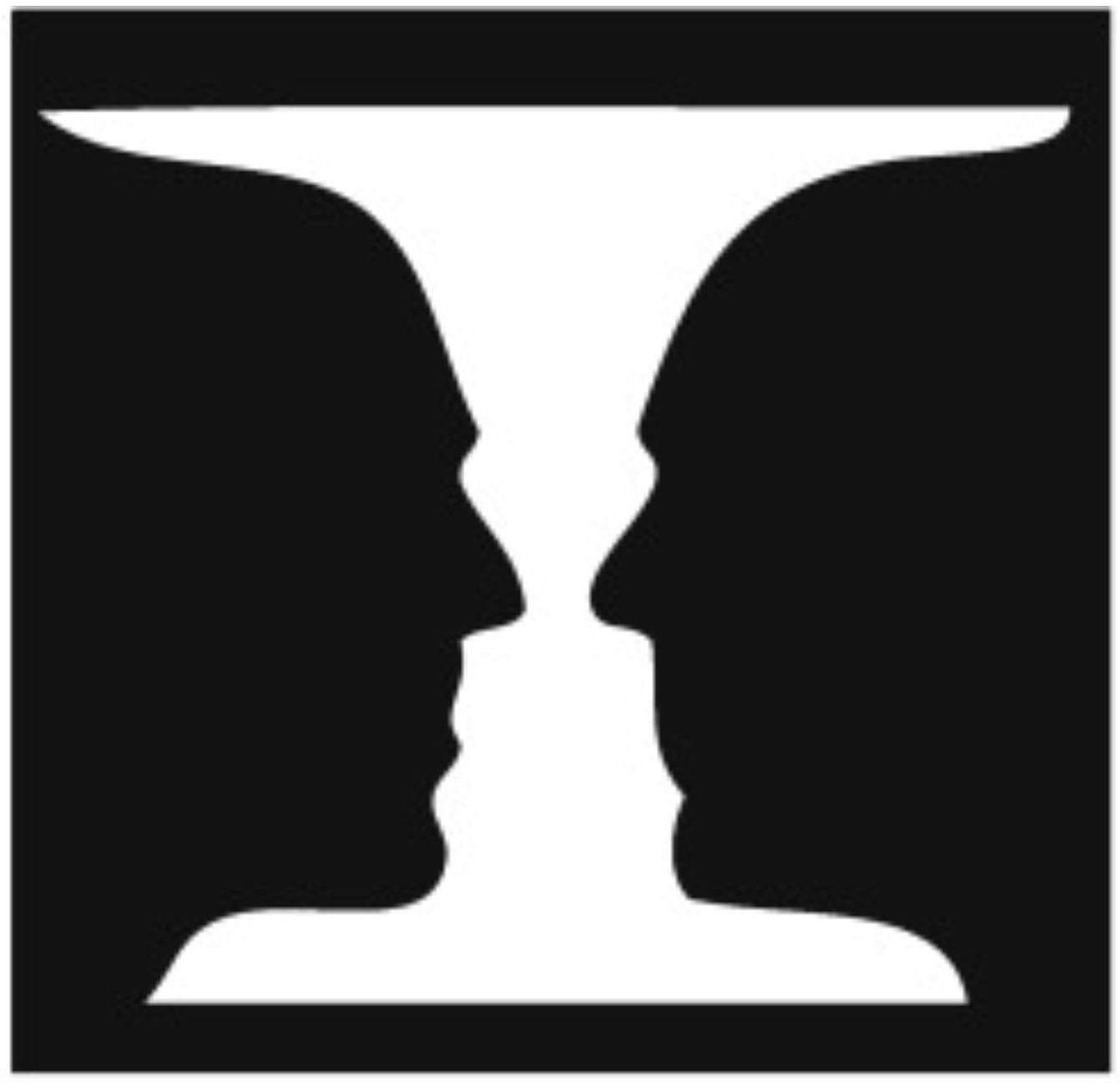
I argue in this chapter that gestalt shifts play a significant role in the mental processes used to determine the moral saliencies of particular situations. I build on the recent debate between Carol Gilligan and Owen Flanagan over the relevance of the gestalt-shift metaphor to the organization and reorganization of our moral perceptions (Gilligan 1987; Flanagan and Jackson 1990; Gilligan and Attanucci 1988; and Flanagan 1991). Throughout the course of this debate, neither of them directly referred to important related issues found in philosophical and psychological discussions of perception. I propose to place this debate within that broader context and argue that a discussion of gestalt shifts in moral perception is directly linked to the more general consideration of how it is that we abstract from and draw meaning out of situations. Connectionist models of cognition, along with research on the role of tasks, metaphors, and analogies in perceptual mental processes, help answer the question, To what degree and under what conditions do we experience gestalt shifts in the organization of our moral perceptions?

Inclusive pages

129-143
Gestalt Shift Examples
ISBN/ISSN
9780262631655
Document Version
Published Version
eCommons Citation
DesAutels, Peggy, 'Gestalt Shifts in Moral Perception' (1996). Philosophy Faculty Publications. 74.
https://ecommons.udayton.edu/phl_fac_pub/74

What Is Gestalt Shift
Included in
Gestalt Theory Reference
COinS